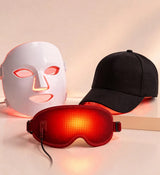
Wavelengths
Why 660nm and 850nm outperform other light therapies
The physics of tissue penetration — and why most at-home devices get it wrong.
Read more →THE SCIENCE
Red light therapy (also called photobiomodulation) uses specific wavelengths of light — 660nm red and 850nm near-infrared — to stimulate cellular energy production. It's backed by 3,000+ peer-reviewed studies and used in dermatology clinics worldwide. Here's exactly how it works, and why Lumisca's devices deliver clinical-grade results at home.
Foundations
Red light therapy — also called low-level light therapy (LLLT) and photobiomodulation (PBM) — is the therapeutic use of specific wavelengths of red (630-660nm) and near-infrared (810-850nm) light.
It's been used in dermatology and sports medicine for over two decades. It does not produce heat. It is not UV. It is not a laser.
At the cellular level, these wavelengths are absorbed by cytochrome c oxidase in the mitochondria, triggering a measurable increase in ATP production.
Penetrates 1-5mm into skin and scalp. Primary wavelength for hair follicle stimulation and surface-level skin outcomes: collagen, elastin, pigmentation.
Penetrates 5-20mm — deep tissue. Ideal for inflammation, cellular repair and reaching follicles below the skin surface.
WAVELENGTHS
660nm (visible red) penetrates the upper layers of skin — the dermis and follicular regions — stimulating fibroblasts to produce collagen and activating hair follicles.
850nm (near-infrared) goes deeper into muscle, joint, and tissue, supporting inflammation reduction, mitochondrial ATP production, and systemic recovery. Used together, they deliver the full spectrum of therapeutic effects.
Visible red — surface stimulation
Skin depth ~2mm
Near-infrared — deep tissue
Tissue depth ~5mm
References
ARTICLES
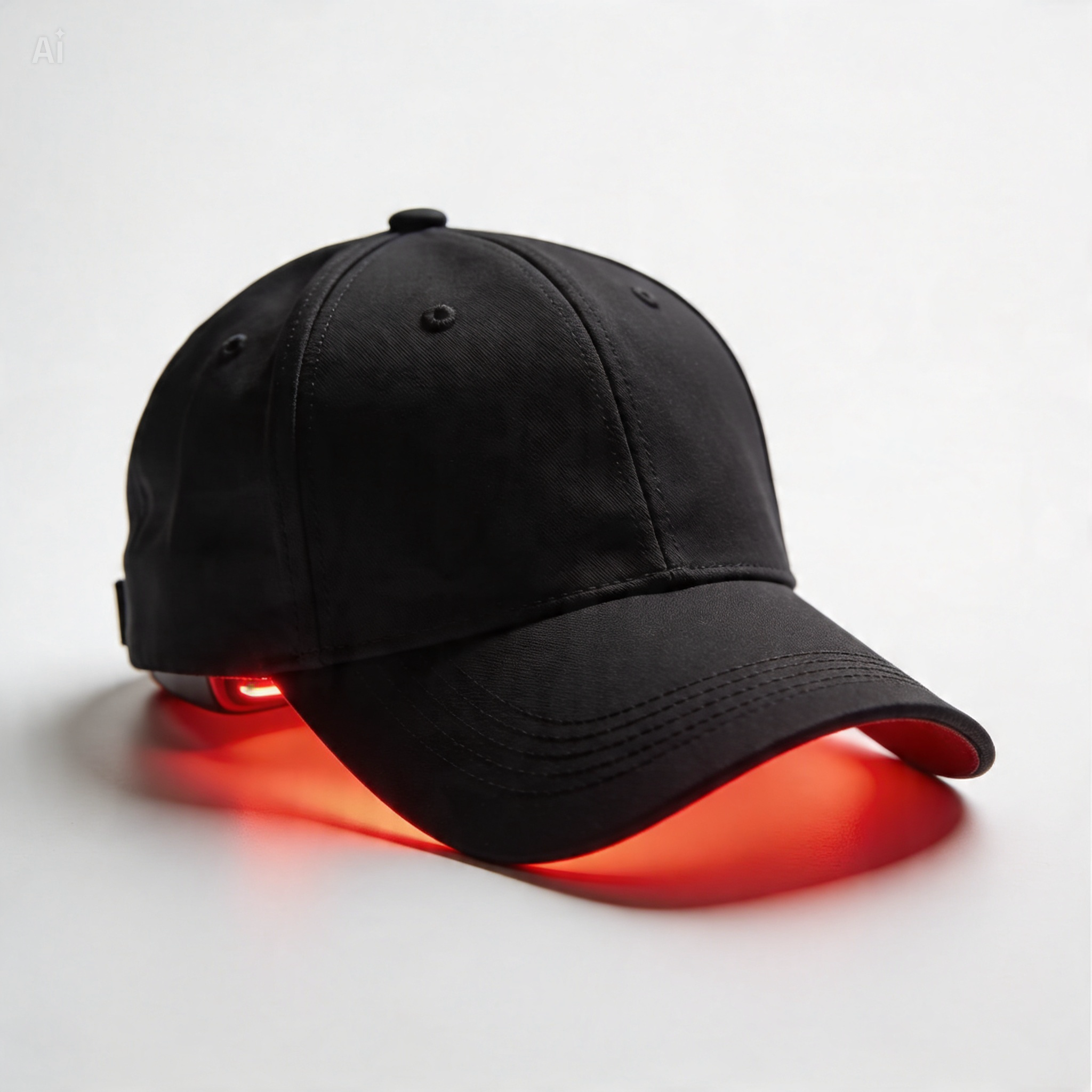
Wavelengths
The physics of tissue penetration — and why most at-home devices get it wrong.
Read more →
Hair Loss
A landmark trial that moved LLLT from fringe to first-line therapy.
Read more →
Skin
Inside the fibroblast pathway that drives every visible improvement.
Read more →
Clinical Trials
A survey of the evidence base — effect sizes, dosing, and open questions.
Read more →